Artificial Intelligence Explained – What Everyone Needs to Know
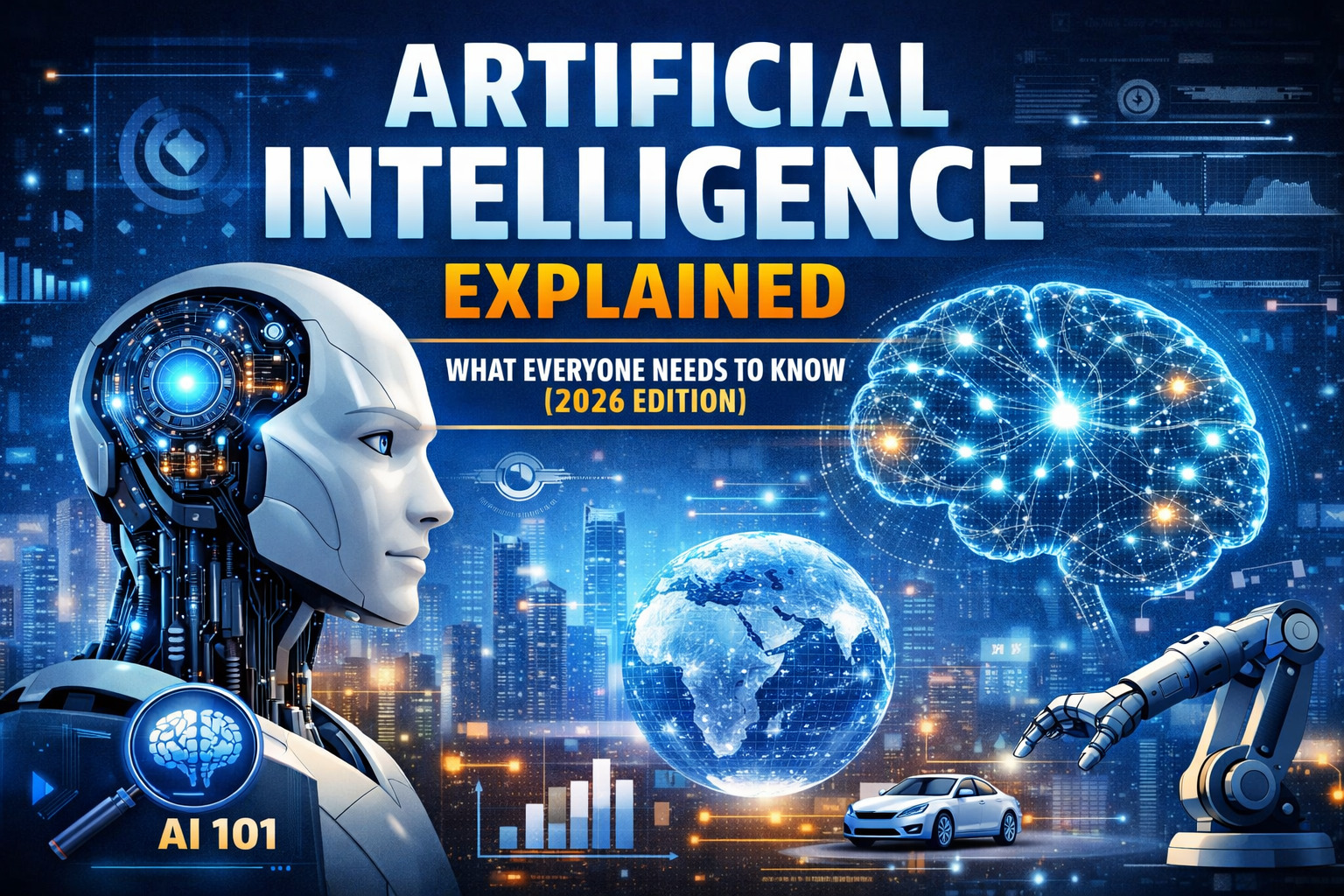
From ChatGPT to driverless cars, Artificial Intelligence (AI) is changing the way we live, work, and think. It’s not just a buzzword anymore AI has become the backbone of modern innovation.
In this simple 2026 guide, we’ll explain what AI really means, how it works, and where it’s heading in the future.
What is Artificial Intelligence?
Artificial Intelligence, or AI, refers to the ability of machines to perform tasks that typically require human intelligence such as understanding language, recognizing patterns, solving problems, and making decisions.
You already interact with AI daily — through virtual assistants like Siri and Alexa, personalized recommendations on Netflix, or smart search results on Google.
How Does AI Work?
AI works by analyzing large sets of data, identifying patterns, and making predictions or decisions based on that information.
Most modern AI systems use machine learning, a method that allows computers to “learn” from data over time. Deep learning, a type of machine learning, uses neural networks that mimic the human brain to process complex information.
Types of Artificial Intelligence
1. Narrow AI
Focused on one specific task.
Examples: ChatGPT, Grammarly, Google Translate.
2. General AI
Designed to perform any intellectual task a human can do.
Example: Still under research and not yet fully developed.
3. Super AI
A hypothetical concept — AI systems more intelligent than humans.
Real-World Applications of AI
AI is no longer limited to labs or tech companies — it’s everywhere.
Here are some of the most impactful uses today:
- In Business: Automating customer support, managing workflows, analyzing data.
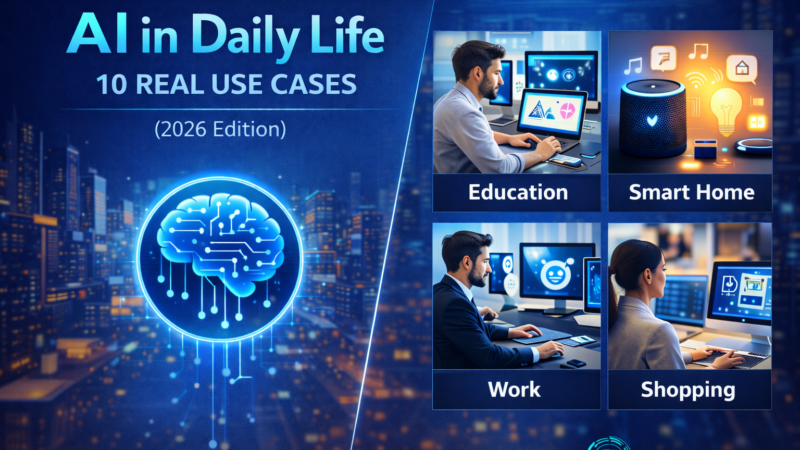
- In Education: Personalized learning, plagiarism detection, writing assistants.
- In Healthcare: AI-based diagnostics, medical image analysis, and virtual consultations.
- In Creative Fields: AI tools for art, content creation, and video generation.
Benefits and Limitations of AI
Benefits:
- Saves time and increases efficiency
- Reduces human errors
- Helps analyze massive data quickly
- Boosts creativity and innovation
Limitations:
- Can be biased if trained on biased data
- Privacy and data protection concerns
- Replaces some repetitive jobs
The Future of Artificial Intelligence
AI is growing smarter, faster, and more human-like every year.
Here are a few 2026 trends to watch:
- Generative AI (tools that create text, images, and videos)
- AI-driven automation in small businesses
- Regulations to ensure ethical AI use
FAQ
AI can automate tasks but cannot fully replace human creativity and emotion.
Yes, when used ethically and with proper regulations. The key is responsible development.
Conclusion
Artificial Intelligence is no longer the future- it’s the foundation of today’s technology.
If you want to start your AI journey, begin with tools designed for learners and professionals.
Want to try AI in your daily life?
Check out our guide Techyspeed.com and see how these tools make learning, writing, and creativity easier.